

STEMxLearning • November 5, 2025
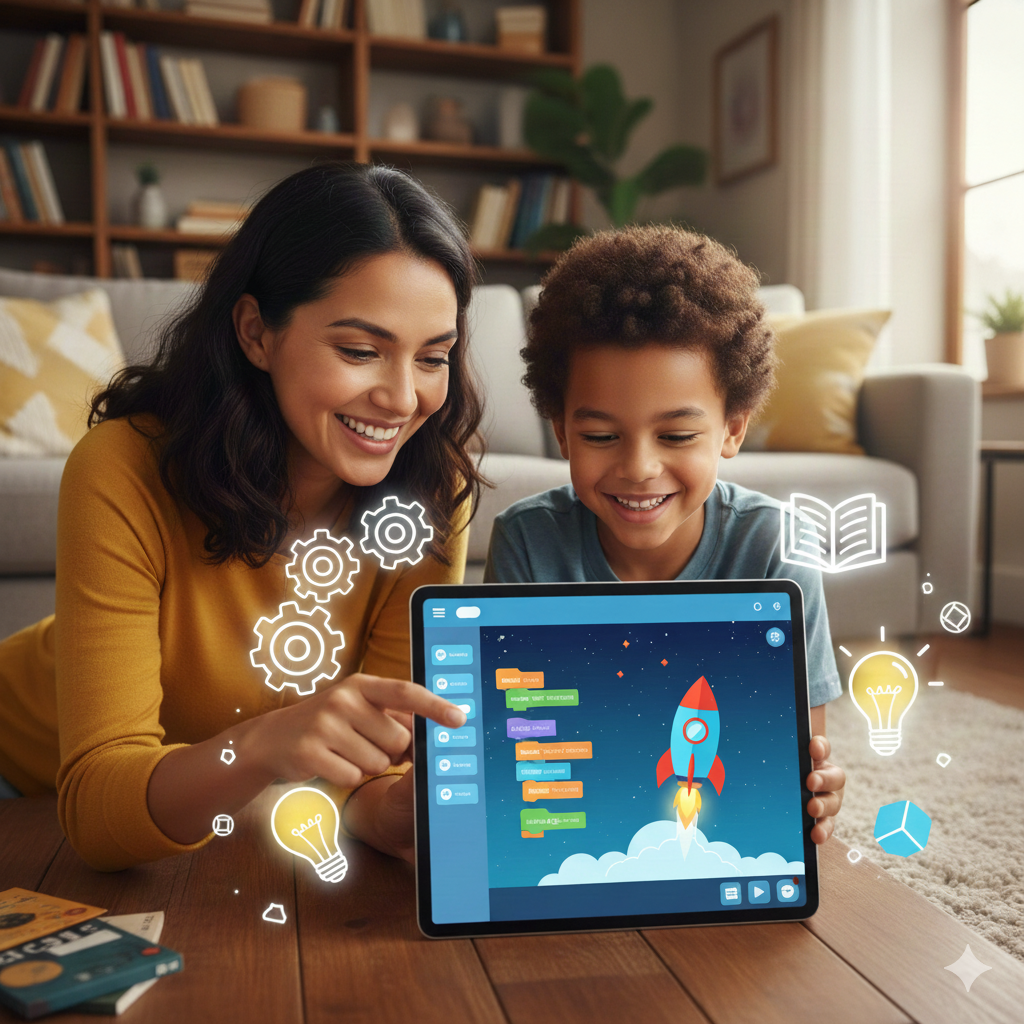
If you’re a parent today, screen time is probably one of your biggest worries. Phones, tablets, laptops, games — screens are everywhere, and it often feels impossible to keep children away from them.
“My child is always on a screen… but are they actually learning anything?”
This question comes up in almost every household. Many parents associate screen time with distraction, addiction, and wasted hours. But here’s the truth: not all screen time is bad.
In fact, when used the right way, screen time can help children develop real, future-ready skills — from logical thinking and creativity to problem-solving and digital confidence.
In this guide, we’ll help parents understand the difference between harmful and helpful screen time, what skills kids can actually learn through technology, and how you can turn everyday screen usage into meaningful learning.
Screen time often gets criticized because of how it is commonly used. Most concerns come from activities such as:
This type of screen usage keeps children entertained but does not engage their thinking. Over time, it can reduce attention span and replace productive activities like reading, outdoor play, or creativity.
However, the problem is not the screen itself — the problem is unstructured and purposeless usage.
There is a major difference between watching something on a screen and creating something using a screen.
When children move from passive consumption to active creation, screen time changes completely. Instead of just absorbing information, they start:
This is when screen time becomes a tool for learning rather than a distraction.
Educational screen time is not about watching more “educational videos”. It’s about using digital tools that encourage thinking and creation.
Skill-based screen time involves activities where children:
This kind of learning feels natural to children because it doesn’t feel like traditional studying.
When kids work on digital projects, things don’t always work perfectly. A character may not move, a game might break, or an idea may fail.
Instead of giving up, children learn to:
This builds patience, analytical thinking, and confidence — skills useful in every subject and career.
Modern platforms introduce coding concepts in a visual and friendly way. Children learn ideas such as:
Even before learning formal programming languages, kids start thinking like problem-solvers and developers.
Smart screen time does not reduce creativity — it enhances it. Children design:
They learn how creativity and logic work together, just like in real-world app and game development.
Many digital learning platforms encourage teamwork. Through collaboration, children learn:
These communication skills are essential for future education and careers.
| Passive Screen Time | Skill-Based Screen Time |
|---|---|
| Watching videos | Creating projects |
| Scrolling endlessly | Goal-oriented tasks |
| No learning feedback | Instant problem-solving feedback |
| Entertainment only | Learning + fun |
The screen isn’t the problem — the activity is.
Parents don’t need to become tech experts to guide their children. Small changes make a big difference:
When parents show interest, children feel motivated to learn more.
Yes. Early exposure to structured digital learning helps children build confidence with technology.
These skills connect to future areas like:
More importantly, children learn how to learn — a skill that lasts for life.
Screen time doesn’t have to be a daily battle. When used correctly, screens can become:
The goal is not to remove screens from children’s lives, but to make screen time meaningful.
With the right guidance, structure, and opportunities, screen time can turn into one of the most powerful learning tools your child ever uses.